
Guide
How to win at slots: what actually affects your results
No system makes slots pay over time. What RTP, volatility and stake size do change, and the GB rules that shape every online slot session.
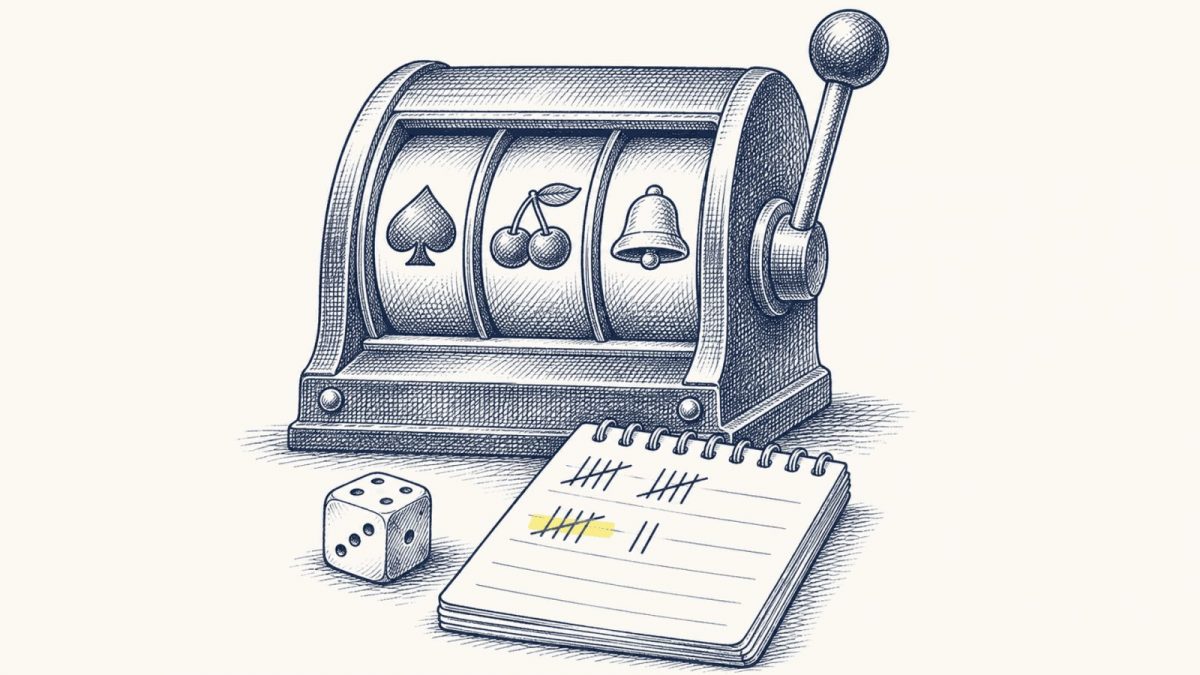
There is no method that makes you win at slots over time. Every spin is decided at random, and every slot is built to pay back less than is staked across all its players, which is the house edge. What you can control is which game you play, how much you stake, how long you play and which bonus terms you accept. Those choices change how a session feels and how long a budget lasts; they do not turn the odds in your favour.
How a slot machine decides each spin
Online slots use a random number generator. The outcome is fixed the moment you press spin, and it has no memory: a slot that has not paid for 200 spins is no more likely to pay on the next one, and a big win does not make the next spin less likely to win. Reels, near misses and animations are presentation. That is why every "system" for how to beat a slot machine fails: there is no pattern to find.
RTP: what the return figure really means
Return to player (RTP) is the share of all money staked that a slot is designed to pay back over a very large number of spins. A slot with 96% RTP returns, on average, £96 for every £100 staked across all its play, and keeps £4. Over one session anything can happen: you can finish well ahead or lose your whole budget, and RTP says nothing about which.
Two practical points. First, the same game can run at different RTP settings, and the version offered in Great Britain may differ from versions elsewhere, so check the game's own information screen rather than a figure quoted online. Second, a higher RTP only means you lose less on average; it is the best reason to prefer one game over another, not a route to profit. The high RTP slots guide lists games by their published figures.
Volatility: how often and how big
Volatility describes how a slot spreads its return. Low-volatility games pay small amounts often, so a balance moves slowly. High-volatility games pay rarely but can pay large amounts, so long losing runs are normal and a budget can disappear quickly. Two slots with the same RTP can feel completely different because of volatility.
| Volatility | Typical pattern | Suits |
|---|---|---|
| Low | Frequent small wins | Longer sessions on a small budget |
| Medium | A mix of small and occasional larger wins | Most players |
| High | Long dry spells, rare large wins | Players who accept losing the whole budget often |
Searches for how to win big on slots usually lead to high-volatility games. They can pay large amounts, but the chance in any session is small and the house edge still applies.
The rules every GB online slot follows
Online slots at casinos licensed by the Gambling Commission work within fixed limits:
- Maximum stake of £5 per spin, or £2 if you are aged 18 to 24 (in force since 9 April and 21 May 2025).
- No autoplay and no turbo or slam-stop features; each spin takes at least 2.5 seconds.
- Wins equal to or below your stake must not be celebrated as wins.
- Your net position and time played are shown during the session.
These rules slow play down and make losses visible. Use the on-screen figures: they are the most accurate record of how a session is going.
Online slots tips that hold up
- Set a budget you can afford to lose and treat it as the cost of entertainment, then set a deposit limit to match.
- Size your stake to your budget. A £20 budget at £1 a spin lasts about 20 losing spins; at 20p it lasts five times longer.
- Read the game's information screen for RTP and how features work before you play.
- Read bonus terms first. Wagering, capped at 10x in Great Britain since 19 January 2026, adds play you may not want.
- Decide a stopping point in time and money, and stop when you reach either.
- Never chase losses. Trying to win back what you have lost is the clearest sign play is no longer fun.
Myths about hot slots, due wins and timing
A slot is not "hot" after a win or "due" after a dry spell. Time of day, the day of the week and how long you have been playing do not change the odds. Changing stake size does not change RTP. Free demo versions run on the same maths as real-money games, but they cannot teach you to predict a random outcome; where demos are available at licensed casinos, they require age verification first.
How to play slots online, briefly
Choose a casino licensed by the Gambling Commission, complete age and identity checks, set a deposit limit when prompted and deposit with a debit card or another accepted method (credit cards cannot be used for gambling in Great Britain). Open a game, read its paytable, set your stake and spin. The online slots guide explains features such as wilds, free spins rounds and Megaways.
18+ only. Slots are designed to be paid for, not profited from. If play stops feeling like a choice, the responsible gambling page lists free, confidential help.
Questions readers ask
Is there a way to win at slots every time?
No. Each spin is random and every slot pays back less than is staked over time. Strategies can change how long a budget lasts, not the odds.
Which slots give the best chance of winning?
Slots with a higher RTP return more on average, and lower volatility gives more frequent small wins. Neither removes the house edge.
What is the maximum bet on online slots in Great Britain?
£5 per spin for players aged 25 and over, and £2 per spin for players aged 18 to 24. The limits apply to online slots, not to other casino games.
Do slots pay more at certain times of day?
No. Outcomes are decided by a random number generator, and the time, day or length of your session has no effect.